He had the wrong dreams
Biff Loman's final judgment on his father—that Willy Loman 'had the wrong dreams. All, all, wrong'—stands as the play's most direct repudiation of the values that drove Willy's life and death. Spoken at the graveside in the Requiem, the line crystallizes Biff's hard-won clarity after a lifetime of conflict and self-deception, and it marks the moment when one son breaks free from the inherited fantasy while the other clings to it.
Context and Speaker
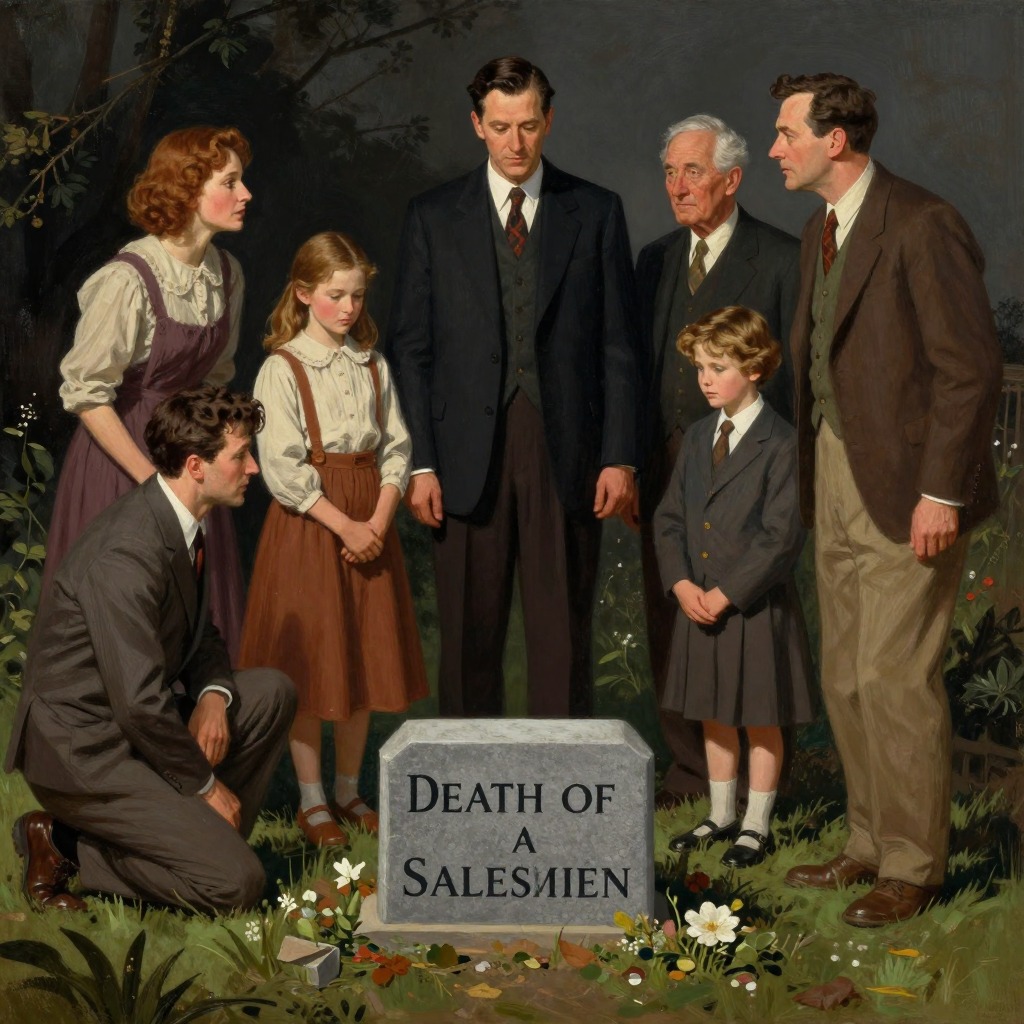
The line comes near the end of the Requiem, after Willy's funeral. Only a handful of people have attended: Linda, Biff, Happy, Charley, and Bernard. Linda, bewildered and grieving, cannot understand why no one else came. Biff, standing before the grave, offers not consolation but a diagnosis. 'He had the wrong dreams. All, all, wrong,' he says. The repetition—'All, all, wrong'—drives home the totality of the error. Biff does not say that Willy failed; he says that the very framework of Willy's aspirations was mistaken. The dreams themselves, not merely their execution, were the problem.
Biff's Journey to This Understanding
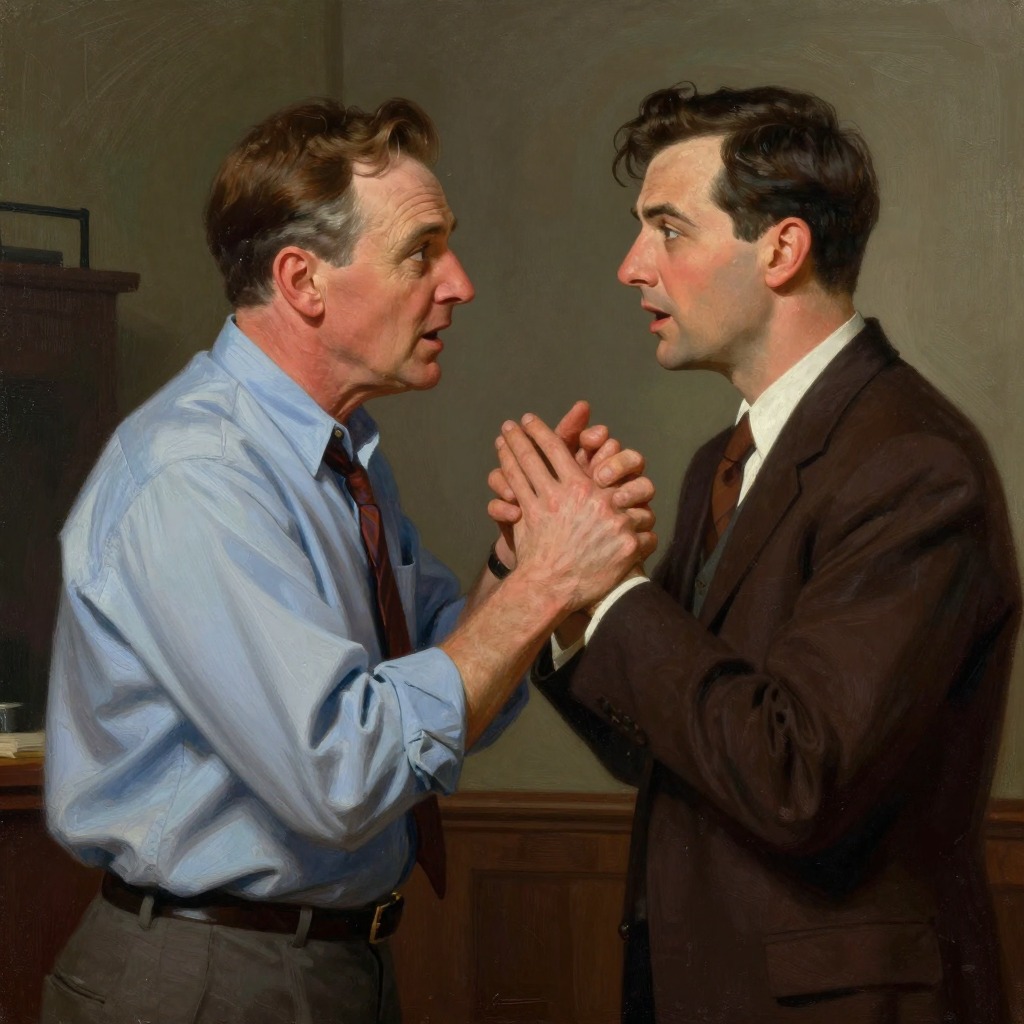
Biff's statement is the culmination of a long, painful arc. Throughout the play, he has struggled to articulate what he senses is false about his father's worldview. In Act One, he tells Happy that he feels 'mixed up very bad' and that he has spent years trying to work himself up in business only to find it 'a measly manner of existence.' He confesses that every spring, when the new colts are born on the Texas ranch where he works, he suddenly feels he is 'not gettin' anywhere' and comes running home—only to realize that 'all I've done is to waste my life.' These early confusions point toward the insight he will later name directly. The decisive break comes in Act Two, when Biff confronts Willy in the kitchen and forces the truth into the open. He tells Willy that he stole a suit in Kansas City and went to jail, that he has stolen himself out of every good job since high school, and that the reason is Willy himself: 'you blew me so full of hot air I could never stand taking orders from anybody!' In that same scene, Biff describes a moment of clarity in Bill Oliver's office building: 'I stopped in the middle of that building and I saw—the sky. I saw the things that I love in this world. The work and the food and time to sit and smoke.' He realizes he has been trying to become what he does not want to be. This is the recognition that prepares him to speak the Requiem's verdict.
The Content of the Wrong Dreams
The 'wrong dreams' Biff identifies are not simply Willy's ambition or his belief in success. They are a specific constellation of values: that being 'well liked' is the key to advancement; that personality and contacts matter more than substance; that a man can 'end with diamonds here on the basis of being liked'; that the world will open its doors to anyone who smiles and shines his shoes. Willy has taught his sons that 'the man who makes an appearance in the business world, the man who creates personal interest, is the man who gets ahead.' He has told them that 'Bernard can get the best marks in school, y'understand, but when he gets out in the business world, y'understand, you are going to be five times ahead of him.' These are the dreams that have left Biff, at thirty-four, unable to hold a job and feeling like a boy. They are the dreams that have left Willy himself, at sixty-three, fired from the firm he helped build, borrowing money from Charley and pretending it is his pay. The dreams are wrong because they are built on a fantasy of effortless popularity rather than on the patient, unglamorous work of making something real.
Contrast with Happy's Response
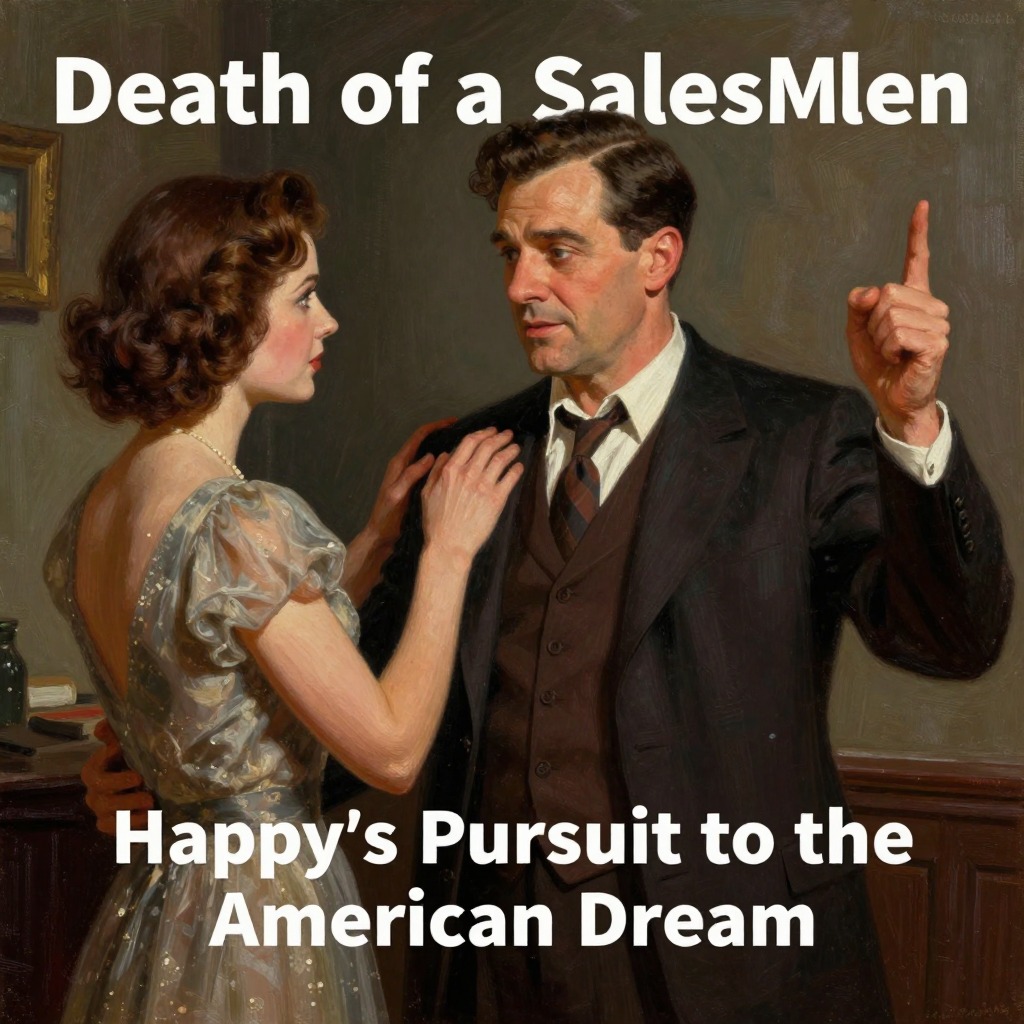
Biff's verdict is immediately contested by Happy, who reacts with fury. 'Don't say that!' he shouts, and then declares, 'I'm gonna show you and everybody else that Willy Loman did not die in vain. He had a good dream. It's the only dream you can have—to come out number-one man. He fought it out here, and this is where I'm gonna win it for him.' Happy's response makes explicit what is at stake: the same dream that destroyed his father will now become Happy's own. He will inherit the fantasy wholesale, without Biff's critical distance. The brothers' divergence at the grave—Biff walking away toward the West and a life of honest labor, Happy staying in the city to 'beat this racket'—enacts the play's central division between those who learn from Willy's failure and those who repeat it.
Thematic Significance
Biff's line is the play's most concise statement of its own critique. It does not blame Willy for being a failure; it blames the culture that sold him a bill of goods. Charley, standing nearby, offers a parallel explanation: 'A salesman is got to dream, boy. It comes with the territory.' But Charley's formulation is descriptive, not prescriptive—it explains why Willy could not help himself, but it does not endorse the dream. Biff's judgment goes further: it declares the dream itself invalid. The play does not, however, offer a simple alternative. Biff's own solution—to go back to the West, to work with his hands, to accept that he is 'one dollar an hour'—is a retreat from the competitive world, not a transformation of it. The 'wrong dreams' are named, but the right ones remain only hinted at: the sky, the work, the food, the time to sit and smoke. The play ends not with a new vision but with the old one exposed, and with Linda's bewildered cry—'We're free'—hanging in the air, ambiguous and unresolved.